
Materials in Design: How to Make Choices That Work in Real Life

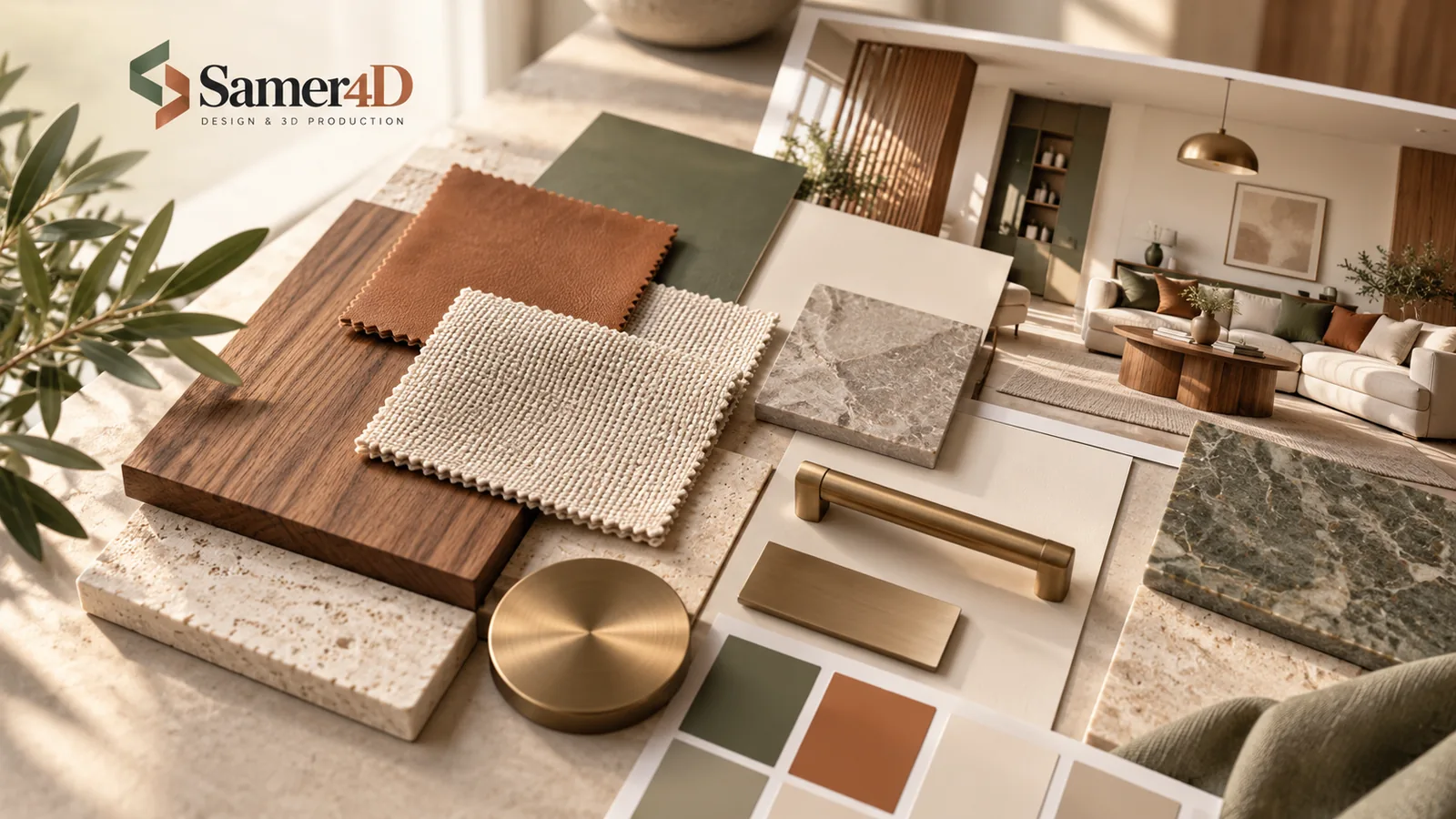
A material is part of the design system
Materials are not a final decorative layer added after the design is finished. Wood thickness changes joinery. Stone slab sizes affect joints. Metal profiles create edges and tolerances. Fabric changes softness and scale. Gloss changes reflections. Material decisions influence both the visual result and the way the project is built.
Start with a direction before choosing an exact product
Early in the design process it is often enough to define a material family: warm light wood, textured limestone, bronze-toned metal, neutral fabric, matte paint. Exact suppliers and product codes can be selected later when the layout and proportions are stable.
Think about scale and repetition
A stone pattern that looks beautiful in a small sample may behave differently across a large wall. Wood grain direction, tile module, panel size, veneer matching, and joint placement all affect the final result. Good detailing acknowledges the real size of the materials being specified.
Reference images are not physical samples
Lighting, photography, screen calibration, and post-processing can change how a material appears. A render helps compare design directions, but it should not be treated as an exact physical color sample. Final procurement decisions may still require real samples or manufacturer information.
Buildability matters most in custom elements
Kitchens, wardrobes, wall cladding, custom furniture, and other fabricated items require realistic material thicknesses and construction logic. An AI-generated inspiration image may show a detail that looks elegant but cannot be fabricated as shown. That is where design and production thinking must replace visual imitation.
Send what you already know
If you have a specific material, product, catalog page, or sample photo, include it in the project. If you do not, we can begin with the visual direction and refine the material decision as the project develops.